|

Rastriya Swayamsevak Sangha Jharsuguda Jilla, SANSKRUTI BHAVAN MANGAL BAZAR JHARSUGUDA PH-06645214158
Saturday, January 21, 2012
Pope Benedict warns US bishops about ‘Grave Threat’ of radical secularism
 Mumbai, January 20: Pope Benedict XVI yesterday warned to American bishops of a “grave threat” to religious liberty in the United States that requires American Catholics to respond with intelligence and courage.
 Pope Benedict said that over the past few days many of the bishops have expressed concern over attempts in the U.S. to “deny the right of conscientious objection on the part of Catholic individuals and institutions with regard to cooperation in intrinsically evil practices.”

Makar Sankranti Festival

Makar Sankranti Index
Tithi (Date)
Makar Sankranti festival, unlike other Hindu festivals, is not dependent on the position of the moon, but on position of the sun. On this day, the sun enters the zodiac sign of Capricorn. To compensate for the difference that occurs due to the revolution around the sun, every eighty years the day of Sankrantiis postponed by one day. In the present period Makar-Sankrantifalls on 15th January.
History
Sankranti is considered a Deity. According to a legend Sankranti killed a demon named Sankarasur. The day followed by Makar Sankrantis called Kinkrant or Karidin. On this day, the female deity (devi) slayed the demon Kinkarasur.
Information
Information on Sankranti is available in the Panchang: The Panchang (Hindu Almanac) provides information on the form, age, clothing, direction of movement etc. of Sankranti. This information is appropriate to the changes taking place in Her according to time. He who is touched by Goddess Sankranti gets destroyed.
Importance
The northward movement of the sun begins on this day. The period from KarkaSankranti(the passage of the sun into the zodiac sign of Cancer) to Makar Sankranti is called the dakshinayan. A person who dies in the dakshinayan period has a greater chance of going to Yamalok (southward region), than one who dies during uttarayan (northward revolution).
Importance from the point of view of spiritual practice: On this day, from sunrise to sunset, the environment has more chaitanya(Divine conscious-ness); hence those doing spiritual practice can benefit from this chaitanya.
Methods of celebration
1. Benefit of highest merit acquired by a Holy dip on the day of Makar Sankranti: The time from sunrise to sunset on Makar-Sankrantiis auspicious. A Holy dip during this period carries special significance. Those who take a Holy dip in the rivers Ganga, Yamuna, Godavari, Krushna and Kaveri at the Holy places situated on the banks of these rivers acquire the highest merit.
2. Offering: Importance of making an offering during an auspicious period: The period from Makar Sankranti to Rathsaptami is an auspicious period. Any donation and meritorious deeds in this period prove more fruitful.
2. Offering: Importance of making an offering during an auspicious period: The period from Makar Sankranti to Rathsaptami is an auspicious period. Any donation and meritorious deeds in this period prove more fruitful.
Substances offered: An offering of new vessels, clothing, food, sesame seeds, pot of sesame seeds, jaggery, a cow, a horse, gold or land should be made depending on the capability. On this day, married women also make some offering. They take things from unmarried girls and give them sesame seeds and jaggery in return. Married women organise a ceremony of haldi-kumkum (applying vermilion and turmeric to the forehead) and gift articles to other married women.
3. Importance of haldi-kumkum ceremony performed by married women on sankranti : Performing haldi-kumkum (Turmeric powder and saffron) ceremony is in a way invoking the waves of dormant Adi-shakti in the Universe to get activated. This helps in creating impression of Sagun (Materialised) devotion on the mind of an individual and enhances his bhav (Spiritual emotion) unto God.
3 A. Steps in haldi-kumkum ceremony
3 A 1. Applying haldi-kumkum : Applying haldi-kumkum to a suvasini (A married woman whose husband is alive) activates the dormant Principle of Sri Durgadevi in her and bestows well-being to the applier suvasini.
3 A 2. Applying perfume : Fragrant particles emitting from the perfume please the Principle of the Deity and bestow well-being to the applier suvasini within a shorter period.
3 A 3. Sprinkling rose-water : The fragrant waves emitted by the rose-water activate the waves of the Deity and purifies the environment, and the suvasini who sprinkles it gets greater benefit of the activated Sagun Principle of the Deity.
 |
3 A 4. Offering a gift : A gift offered is always supported by the end of the pallu of the sari. Offering a gift to another suvasini amounts to surrendering to the divinity in her, through sacrifice of body, mind and wealth. Giving support of the end of pallu of the sari means leaving attachment to even the clothes worn on the body and thus learning to overcome body awareness. Since the period of sankrantiis favourable for sadhana, a gift given during this period pleases the Deities quickly and they bestow the donor suvasini with the desired fruit.
What should be gifted ? : Instead of gifting non-dharmik commodities like soap, plastic items etc., objects complementary to Spirituality and are indicators of a married life, such as incense-sticks, ubtan (Fragrant herbal powder), religious and Holy texts, pictures of Deities, CDs on spiritual topics etc. should be gifted.
3 A 5. Small mud pots: The festival of Sankrantirequires small mud pots called sugad (in the Marathi language). Vermilion and turmeric powder is applied to the pots and a thread is tied to them. They are filled with carrots, jujube fruits, sugarcane pieces, pods, cotton, chickpeas, sesame seeds with jaggery, vermilion, turmeric etc. Five pots are placed on a wooden seat, rangoli is drawn around the seat and worshipped. Of these, three are gifted to married women, one is offered to the tulsi plant and one is retained.
 |
4. Use of sesame seeds: Maximum use of sesame seeds is made during Sankrantifestival. For example, bathing with water containing sesame seeds and eating and distributing tilgul (a sweet made from sesame seeds), offering sesame to Brahmans, lighting lamps of sesame oil in a temple of Lord Shiva and performing pitrushraddh (rite for the departed ancestors) in which an offering of sesame seeds is made.
Importance of sesame seeds :
Using sesame seeds eliminates sins : On this day those who apply sesame seed oil and utane to the body, bathe in water mixed with sesame seeds, drink water mixed with sesame seeds, perform a sacrificial fire, make an offering of sesame seeds and make similar use of sesame seeds, are liberated of all sins.
Importance according to Ayurved: Since Sankrantifalls in winter, consuming sesame seeds is beneficial.
Importance according to Spirituality:
1. Since sesame seeds have a greater ability to absorb and emit sattva frequencies, consuming tilgul helps improve spiritual practice. Distributing tilgul to one another results in an exchange of the sattva component.
2. Using sesame seeds in shraddh prevents demons from bringing obstacles during the rite.
1. Since sesame seeds have a greater ability to absorb and emit sattva frequencies, consuming tilgul helps improve spiritual practice. Distributing tilgul to one another results in an exchange of the sattva component.
2. Using sesame seeds in shraddh prevents demons from bringing obstacles during the rite.
5. Forbidden acts!
During the period of sankrant, brushing teeth, talking harshly, cutting trees or grass and acts provoking sexual urges should be avoided.
During the period of sankrant, brushing teeth, talking harshly, cutting trees or grass and acts provoking sexual urges should be avoided.
6. Do not fly kites!
Today, when the Nation and Dharma are in peril, flying kites for the sake of entertainment is akin to, 'Nero playing the fiddle while Rome burnt'. If the time spent on flying kites is used for the development of the Nation, it will make it progress faster; and if used for spiritual practice and missions related to Dharma, then society and the individual will benefit.
Today, when the Nation and Dharma are in peril, flying kites for the sake of entertainment is akin to, 'Nero playing the fiddle while Rome burnt'. If the time spent on flying kites is used for the development of the Nation, it will make it progress faster; and if used for spiritual practice and missions related to Dharma, then society and the individual will benefit.
(Reference: Sanatan's Holy text Holy Festivals, Religious Festivals and Vowed Religious Observances)
Culture & Festivities

The holy Vans given on the Makar Sankranti
This festival is celebrated differently in different parts of the country.
Uttar Pradesh
In Uttar Pradesh, Sankrantiis called ‘Khichiri’. Taking a dip in the holy rivers on this day is regarded as most auspicious. A big one-month long ‘Magha-Mela’ fair begins at Prayag (Allahabad) on this occasion. Apart from Triveni, ritual bathing also takes place at many places like Haridvar and Garh Mukteshwar in Uttar Pradesh, and Patna in Bihar.
Bengal
In Bengal every year a very big Mela is held at Ganga Sagar where the river Ganga is believed to have dived into the nether region and vivified the ashes of the sixty thousand ancestors of King Bhagirath. This mela is attended by a large number of pilgrims from all over the country.
Tamil Nadu
In Tamil Nadu Sankrantiis known by the name of ‘Pongal’, which takes its name from the surging of rice boiled in a pot of milk, and this festival has more significance than even Diwali. It is very popular particularly amongst farmers. Rice and pulses cooked together in ghee and milk is offered to the family deity after the ritual worship. In essence in the South this Sankrantiis a ‘Puja’ (worship) for the Sun God.
Andhra Pradesh
In Andhra Pradesh, it is celebrated as a three-day harvest festival Pongal. It is a big event for the people of Andhra Pradesh. The Telugus like to call it 'Pedda Panduga' meaning big festival. The whole event lasts for four days, the first day Bhogi, the second day Sankranti, the third day Kanuma and the fourth day, Mukkanuma.
Karnataka
In Karnataka, the festival is marked by visiting one's friends and relatives to exchange greetings, and by the preparation of a dish called Ellu (made with sesame seeds, coconuts, sugar blocks, etc). A common custom found across Karnataka is the exchange of sugarcane pieces and Ellu with one's neighbors, friends and relatives. In Karnataka, Pongal is known as 'Sankranti', and cows and bullocks are gaily decorated and fed 'Pongal'- a sweet preparation of rice. Special prayers are offered. In the evening, the cattle are led out in procession to the beat of drums and music. In the night a bonfire is lit and the animals are made to jump over the fire.
Makar Sankranti is marked by men, women and children wearing colorful clothing; visiting near and dear ones; and exchanging pieces of sugarcane, a mixture of fried til, molasses, pieces of dry coconut, peanuts and fried gram. On this auspicious day, people in Karnataka distribute Yellu and bella (Sesame seeds and Jaggery) and greet with the words " “Ellu bella thindu, Olle Maathu Aadu” (Eat sesame seeds and speak only good). The significance of this exchange is that sweetness should prevail in all the dealings.
Maharashtra
In Maharashtra on the Sankranti day people exchange multi-colored tilguds made from til (sesame seeds) and sugar and til-laddus made from til and jaggery. Til-polis are offered for lunch. While exchanging tilguls as tokens of goodwill people greet each other saying – ‘til-gul ghya, god god bola’ meaning ‘accept these tilguls and speak sweet words’. The under-lying thought in the exchange of tilguls is to forget the past ill-feelings and hostilities and resolve to speak sweetly and remain friends.
This is a special day for the women in Maharashtra when married women are invited for a get-together called ‘Haldi-Kumkum’ and given gifts of any utensil, which the woman of the house purchases on that day. Hindus wear ornaments made of 'Halwa' on this day.
Gujarat
In Gujarat Sankrantiis observed more or less in the same manner as in Maharashtra but with a difference that in Gujarat there is a custom of giving gifts to relatives. The elders in the family give gifts to the younger members of the family. The Gujarati Pundits on this auspicious day grant scholarships to students for higher studies in astrology and philosophy. This festival thus helps the maintenance of social relationships within the family, caste and community.
Punjab
In Punjab where December and January are the coldest months of the year, huge bonfires are lit on the eve of Sankrantiand which is celebrated as "LOHARI". Sweets, sugarcane and rice are thrown in the bonfires, around which friends and relatives gather together. The following day, which is Sankrant, is celebrated as MAGHI. The Punjabi's dance their famous Bhangra dance till they get exhausted. Then they sit down and eat the sumptuous food that is specially prepared for the occasion.
Kerala
The 40 days anushthana by the devotees of Ayyappa ends on this day in Sabarimala with a big festival.
Bundelkhand
In Bundelkhand and Madhya Pradesh this festival of Sankrantiis known by the name ‘Sakarat’ and is celebrated with great pomp & merriment accompanied by lot of sweets.
Tribals of Orissa
Many tribals in our country start their New Year from the day of Sankrantiby lighting bonfires, dancing and eating their particular dishes sitting together. The Bhuya tribals of Orissa have their Maghyatra in which small home-made articles are put for sale.
Assam
In Assam, the festival is celebrated as Bhogali Bihu.
Coastal Region
In the coastal regions, it is a harvest festival dedicated to Indra.
Great Indian Hindu Sages who revolutionised the field of Science
Our illustrious past in the field of Science before the invasions of Islamic & Portuguese hordes is worth noting. This should give inspiration to our young generation who will then realise what great scientists were produced in the golden era of India.
Born in 476 CE in Kusumpur ( Bihar ), Aryabhatt's intellectual brilliance remapped the boundaries of mathematics and astronomy. In 499 CE, at the age of 23, he wrote a text on astronomy and an unparallel treatise on mathematics called "Aryabhatiyam." He formulated the process of calculating the motion of planets and the time of eclipses. Aryabhatt was the first to proclaim that the earth is round, it rotates on its axis, orbits the sun and is suspended in space - 1000 years before Copernicus published his heliocentric theory. He is also acknowledged for calculating p (Pi) to four decimal places: 3.1416 and the sine table in trigonometry. Centuries later, in 825 CE, the Arab mathematician, Mohammed Ibna Musa credited the value of Pi to the Indians, "This value has been given by the Hindus." And above all, his most spectacular contribution was the concept of zero without which modern computer technology would have been non-existent. Aryabhatt was a colossus in the field of mathematics.
Born in the obscure village of Vijjadit (Jalgaon) in Maharastra, Bhaskaracharya' s work in Algebra, Arithmetic and Geometry catapulted him to fame and immortality. His renowned mathematical works called "Lilavati" and "Bijaganita" are considered to be unparalled and a memorial to his profound intelligence. Its translation in several languages of the world bear testimony to its eminence. In his treatise " Siddhant Shiromani " he writes on planetary positions, eclipses, cosmography, mathematical techniques and astronomical equipment. In the " Surya Siddhant " he makes a note on the force of gravity: "Objects fall on earth due to a force of attraction by the earth. Therefore, the earth, planets, constellations, moon, and sun are held in orbit due to this attraction." Bhaskaracharya was the first to discover gravity, 500 years before Sir Isaac Newton . He was the champion among mathematicians of ancient and medieval India . His works fired the imagination of Persian and European scholars, who through research on his works earned fame and popularity.
As the founder of " Vaisheshik Darshan "- one of six principal philosophies of India - Acharya Kanad was a genius in philosophy. He is believed to have been born in Prabhas Kshetra near Dwarika in Gujarat . He was the pioneer expounder of realism, law of causation and the atomic theory. He has classified all the objects of creation into nine elements, namely: earth, water, light, wind, ether, time, space, mind and soul. He says, "Every object of creation is made of atoms which in turn connect with each other to form molecules." His statement ushered in the Atomic Theory for the first time ever in the world, nearly 2500 years before John Dalton . Kanad has also described the dimension and motion of atoms and their chemical reactions with each other. The eminent historian, T.N. Colebrook , has said, "Compared to the scientists of Europe , Kanad and other Indian scientists were the global masters of this field."
He was an extraordinary wizard of science born in the nondescript village of Baluka in Madhya Pradesh . His dedicated research for twelve years produced maiden discoveries and inventions in the faculties of chemistry and metallurgy. Textual masterpieces like " Ras Ratnakar ," "Rashrudaya" and "Rasendramangal" are his renowned contributions to the science of chemistry. Where the medieval alchemists of England failed, Nagarjuna had discovered the alchemy of transmuting base metals into gold. As the author of medical books like "Arogyamanjari" and "Yogasar," he also made significant contributions to the field of curative medicine. Because of his profound scholarliness and versatile knowledge, he was appointed as Chancellor of the famous University of Nalanda . Nagarjuna's milestone discoveries impress and astonish the scientists of today.
A genius who has been glowingly recognized in the annals of medical science. Born to sage Vishwamitra, Acharya Sudhrut details the first ever surgery procedures in " Sushrut Samhita ," a unique encyclopedia of surgery. He is venerated as the father of plastic surgery and the science of anesthesia. When surgery was in its infancy in Europe , Sushrut was performing Rhinoplasty (restoration of a damaged nose) and other challenging operations. In the " Sushrut Samhita ," he prescribes treatment for twelve types of fractures and six types of dislocations. His details on human embryology are simply amazing. Sushrut used 125 types of surgical instruments including scalpels, lancets, needles, Cathers and rectal speculums; mostly designed from the jaws of animals and birds. He has also described a number of stitching methods; the use of horse's hair as thread and fibers of bark. In the " Sushrut Samhita ," and fibers of bark. In the " Sushrut Samhita ," he details 300 types of operations. The ancient Indians were the pioneers in amputation, caesarian and cranial surgeries. Acharya Sushrut was a giant in the arena of medical science.
renowned astrologer and astronomer who was honored with a special decoration and status as one of the nine gems in the court of King Vikramaditya in Avanti ( Ujjain ). Varahamihir' s book "panchsiddhant" holds a prominent place in the realm of astronomy. He notes that the moon and planets are lustrous not because of their own light but due to sunlight. In the " Bruhad Samhita " and " Bruhad Jatak ," he has revealed his discoveries in the domains of geography, constellation, science, botany and animal science. In his treatise on botanical science, Varamihir presents cures for various diseases afflicting plants and trees. The rishi-scientist survives through his unique contributions to the science of astrology and astronomy.
The Science of Yoga is one of several unique contributions of India to the world. It seeks to discover and realize the ultimate Reality through yogic practices. Acharya Patanjali , the founder, hailed from the district of Gonda (Ganara) in Uttar Pradesh . He prescribed the control of prana (life breath) as the means to control the body, mind and soul. This subsequently rewards one with good health and inner happiness. Acharya Patanjali 's 84 yogic postures effectively enhance the efficiency of the respiratory, circulatory, nervous, digestive and endocrine systems and many other organs of the body. Yoga has eight limbs where Acharya Patanjali shows the attainment of the ultimate bliss of God in samadhi through the disciplines of: yam, niyam, asan, pranayam, pratyahar, dhyan and dharna. The Science of Yoga has gained popularity because of its scientific approach and benefits. Yoga also holds the honored place as one of six philosophies in the Indian philosophical system. Acharya Patanjali will forever be remembered and revered as a pioneer in the science of self-discipline, happiness and self-realization.
Acharya Bharadwaj had a hermitage in the holy city of Prayag and was an ordent apostle of Ayurveda and mechanical sciences. He authored the " Yantra Sarvasva " which includes astonishing and outstanding discoveries in aviation science, space science and flying machines. He has described three categories of flying machines: 1.) One that flies on earth from one place to another. 2.) One that travels from one planet to another. 3.) And One that travels from one universe to another. His designs and descriptions have impressed and amazed aviation engineers of today. His brilliance in aviation technology is further reflected through techniques described by him:
1.) Profound Secret: The technique to make a flying machine invisible through the application of sunlight and wind force.
2.) Living Secret: The technique to make an invisible space machine visible through the application of electrical force.
3.) Secret of Eavesdropping: The technique to listen to a conversation in another plane.
4.) Visual Secrets: The technique to see what's happening inside another plane.
Through his innovative and brilliant discoveries, Acharya Bharadwaj has been recognized as the pioneer of aviation technology.
Celebrated as the founder of Sankhya philosophy, Acharya Kapil is believed to have been born in 3000 BCE to the illustrious sage Kardam and Devhuti. He gifted the world with the Sankhya School of Thought. His pioneering work threw light on the nature and principles of the ultimate Soul (Purusha), primal matter (Prakruti) and creation. His concept of transformation of energy and profound commentaries on atma, non-atma and the subtle elements of the cosmos places him in an elite class of master achievers - incomparable to the discoveries of other cosmologists. On his assertion that Prakruti, with the inspiration of Purusha, is the mother of cosmic creation and all energies, he contributed a new chapter in the science of cosmology. Because of his extrasensory observations and revelations on the secrets of creation, he is recognized and saluted as the Father of Cosmology.
Aryabhatt (476 CE) - Master Astronomer and Mathematician
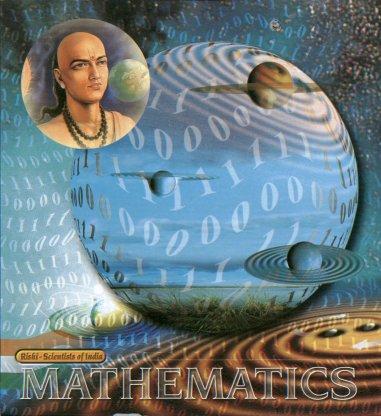 |
Born in 476 CE in Kusumpur ( Bihar ), Aryabhatt's intellectual brilliance remapped the boundaries of mathematics and astronomy. In 499 CE, at the age of 23, he wrote a text on astronomy and an unparallel treatise on mathematics called "Aryabhatiyam." He formulated the process of calculating the motion of planets and the time of eclipses. Aryabhatt was the first to proclaim that the earth is round, it rotates on its axis, orbits the sun and is suspended in space - 1000 years before Copernicus published his heliocentric theory. He is also acknowledged for calculating p (Pi) to four decimal places: 3.1416 and the sine table in trigonometry. Centuries later, in 825 CE, the Arab mathematician, Mohammed Ibna Musa credited the value of Pi to the Indians, "This value has been given by the Hindus." And above all, his most spectacular contribution was the concept of zero without which modern computer technology would have been non-existent. Aryabhatt was a colossus in the field of mathematics.
Bhaskaracharya || (1114-1183 CE) - Genius in Algebra
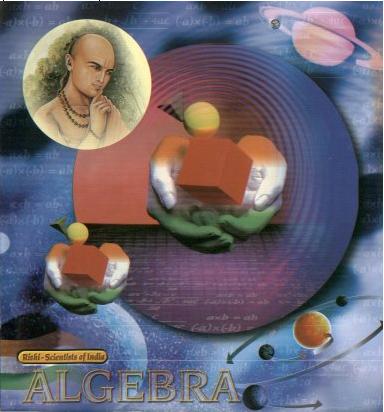 |
Born in the obscure village of Vijjadit (Jalgaon) in Maharastra, Bhaskaracharya' s work in Algebra, Arithmetic and Geometry catapulted him to fame and immortality. His renowned mathematical works called "Lilavati" and "Bijaganita" are considered to be unparalled and a memorial to his profound intelligence. Its translation in several languages of the world bear testimony to its eminence. In his treatise " Siddhant Shiromani " he writes on planetary positions, eclipses, cosmography, mathematical techniques and astronomical equipment. In the " Surya Siddhant " he makes a note on the force of gravity: "Objects fall on earth due to a force of attraction by the earth. Therefore, the earth, planets, constellations, moon, and sun are held in orbit due to this attraction." Bhaskaracharya was the first to discover gravity, 500 years before Sir Isaac Newton . He was the champion among mathematicians of ancient and medieval India . His works fired the imagination of Persian and European scholars, who through research on his works earned fame and popularity.
Acharya Kanad (600 BCE) - Founder of Atomic Theory
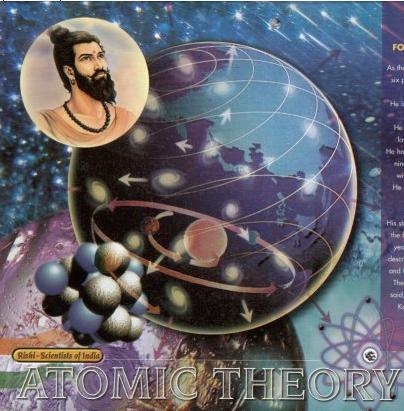 |
As the founder of " Vaisheshik Darshan "- one of six principal philosophies of India - Acharya Kanad was a genius in philosophy. He is believed to have been born in Prabhas Kshetra near Dwarika in Gujarat . He was the pioneer expounder of realism, law of causation and the atomic theory. He has classified all the objects of creation into nine elements, namely: earth, water, light, wind, ether, time, space, mind and soul. He says, "Every object of creation is made of atoms which in turn connect with each other to form molecules." His statement ushered in the Atomic Theory for the first time ever in the world, nearly 2500 years before John Dalton . Kanad has also described the dimension and motion of atoms and their chemical reactions with each other. The eminent historian, T.N. Colebrook , has said, "Compared to the scientists of Europe , Kanad and other Indian scientists were the global masters of this field."
Nagarjuna (100 CE) - Wizard of Chemical Science
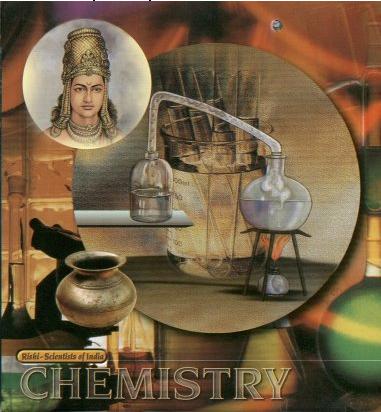 |
He was an extraordinary wizard of science born in the nondescript village of Baluka in Madhya Pradesh . His dedicated research for twelve years produced maiden discoveries and inventions in the faculties of chemistry and metallurgy. Textual masterpieces like " Ras Ratnakar ," "Rashrudaya" and "Rasendramangal" are his renowned contributions to the science of chemistry. Where the medieval alchemists of England failed, Nagarjuna had discovered the alchemy of transmuting base metals into gold. As the author of medical books like "Arogyamanjari" and "Yogasar," he also made significant contributions to the field of curative medicine. Because of his profound scholarliness and versatile knowledge, he was appointed as Chancellor of the famous University of Nalanda . Nagarjuna's milestone discoveries impress and astonish the scientists of today.
Acharya Charak (600 BCE) - Father of Medicine
Acharya Charak has been crowned as the Father of Medicine. His renowned work, the " Charak Samhita ", is considered as an encyclopedia of Ayurveda. His principles, diagoneses, and cures retain their potency and truth even after a couple of millennia. When the science of anatomy was confused with different theories in Europe , Acharya Charak revealed through his innate genius and enquiries the facts on human anatomy, embryology, pharmacology, blood circulation and diseases like diabetes, tuberculosis, heart disease, etc. In the " Charak Samhita " he has described the medicinal qualities and functions of 100,000 herbal plants. He has emphasized the influence of diet and activity on mind and body. He has proved the correlation of spirituality and physical health contributed greatly to diagnostic and curative sciences. He has also prescribed and ethical charter for medical practitioners two centuries prior to the Hippocratic oath. Through his genius and intuition, Acharya Charak made landmark contributions to Ayurvedal. He forever remains etched in the annals of history as one of the greatest and noblest of rishi-scientists.Acharya Sushrut (600 BCE) - Father of Plastic Surgery
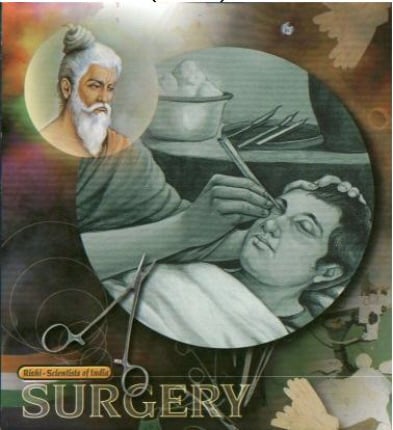 |
A genius who has been glowingly recognized in the annals of medical science. Born to sage Vishwamitra, Acharya Sudhrut details the first ever surgery procedures in " Sushrut Samhita ," a unique encyclopedia of surgery. He is venerated as the father of plastic surgery and the science of anesthesia. When surgery was in its infancy in Europe , Sushrut was performing Rhinoplasty (restoration of a damaged nose) and other challenging operations. In the " Sushrut Samhita ," he prescribes treatment for twelve types of fractures and six types of dislocations. His details on human embryology are simply amazing. Sushrut used 125 types of surgical instruments including scalpels, lancets, needles, Cathers and rectal speculums; mostly designed from the jaws of animals and birds. He has also described a number of stitching methods; the use of horse's hair as thread and fibers of bark. In the " Sushrut Samhita ," and fibers of bark. In the " Sushrut Samhita ," he details 300 types of operations. The ancient Indians were the pioneers in amputation, caesarian and cranial surgeries. Acharya Sushrut was a giant in the arena of medical science.
Varahmihir (499-587 CE) - Eminent Astrologer and Astronomera
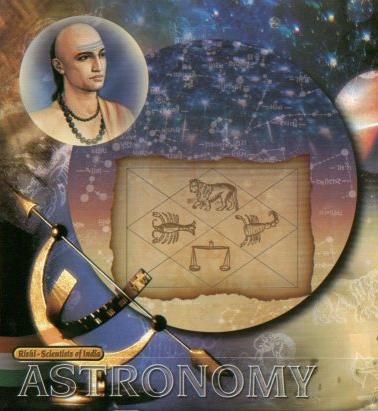 |
renowned astrologer and astronomer who was honored with a special decoration and status as one of the nine gems in the court of King Vikramaditya in Avanti ( Ujjain ). Varahamihir' s book "panchsiddhant" holds a prominent place in the realm of astronomy. He notes that the moon and planets are lustrous not because of their own light but due to sunlight. In the " Bruhad Samhita " and " Bruhad Jatak ," he has revealed his discoveries in the domains of geography, constellation, science, botany and animal science. In his treatise on botanical science, Varamihir presents cures for various diseases afflicting plants and trees. The rishi-scientist survives through his unique contributions to the science of astrology and astronomy.
Acharya Patanjali (200 BCE) - Father of Yoga
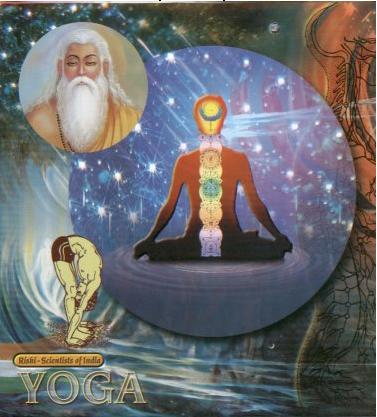 |
The Science of Yoga is one of several unique contributions of India to the world. It seeks to discover and realize the ultimate Reality through yogic practices. Acharya Patanjali , the founder, hailed from the district of Gonda (Ganara) in Uttar Pradesh . He prescribed the control of prana (life breath) as the means to control the body, mind and soul. This subsequently rewards one with good health and inner happiness. Acharya Patanjali 's 84 yogic postures effectively enhance the efficiency of the respiratory, circulatory, nervous, digestive and endocrine systems and many other organs of the body. Yoga has eight limbs where Acharya Patanjali shows the attainment of the ultimate bliss of God in samadhi through the disciplines of: yam, niyam, asan, pranayam, pratyahar, dhyan and dharna. The Science of Yoga has gained popularity because of its scientific approach and benefits. Yoga also holds the honored place as one of six philosophies in the Indian philosophical system. Acharya Patanjali will forever be remembered and revered as a pioneer in the science of self-discipline, happiness and self-realization.
Acharya Bharadwaj (800 BCE) - Pioneer of Aviation Technology
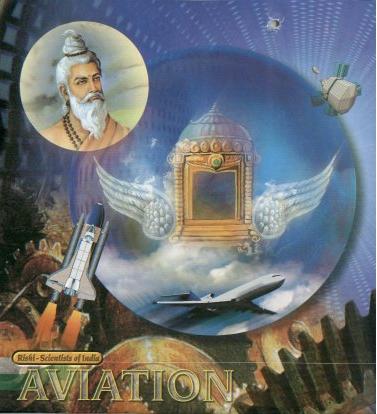 |
Acharya Bharadwaj had a hermitage in the holy city of Prayag and was an ordent apostle of Ayurveda and mechanical sciences. He authored the " Yantra Sarvasva " which includes astonishing and outstanding discoveries in aviation science, space science and flying machines. He has described three categories of flying machines: 1.) One that flies on earth from one place to another. 2.) One that travels from one planet to another. 3.) And One that travels from one universe to another. His designs and descriptions have impressed and amazed aviation engineers of today. His brilliance in aviation technology is further reflected through techniques described by him:
1.) Profound Secret: The technique to make a flying machine invisible through the application of sunlight and wind force.
2.) Living Secret: The technique to make an invisible space machine visible through the application of electrical force.
3.) Secret of Eavesdropping: The technique to listen to a conversation in another plane.
4.) Visual Secrets: The technique to see what's happening inside another plane.
Through his innovative and brilliant discoveries, Acharya Bharadwaj has been recognized as the pioneer of aviation technology.
Acharya Kapil (3000 BCE) - Father of Cosmology
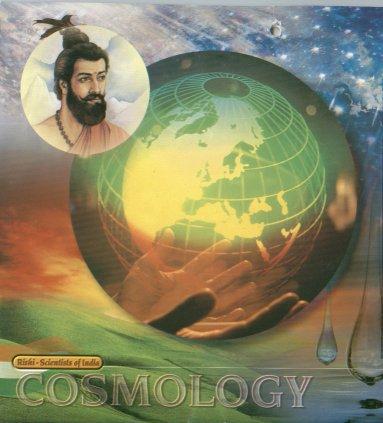 |
Celebrated as the founder of Sankhya philosophy, Acharya Kapil is believed to have been born in 3000 BCE to the illustrious sage Kardam and Devhuti. He gifted the world with the Sankhya School of Thought. His pioneering work threw light on the nature and principles of the ultimate Soul (Purusha), primal matter (Prakruti) and creation. His concept of transformation of energy and profound commentaries on atma, non-atma and the subtle elements of the cosmos places him in an elite class of master achievers - incomparable to the discoveries of other cosmologists. On his assertion that Prakruti, with the inspiration of Purusha, is the mother of cosmic creation and all energies, he contributed a new chapter in the science of cosmology. Because of his extrasensory observations and revelations on the secrets of creation, he is recognized and saluted as the Father of Cosmology.
Friday, January 20, 2012
Surya Namaskar – will Congress get awakened only after patent is filed by the West?
 |  |

The same mind-set of opposing everything rooted in Indian soil surfaces whenever any organization or Govt comes up with something purely “INDIAN”. The same mind-set and the political ideologies opposed the inclusion of Vedic Mathematics as a subject in university levels when Vajpayee was Prime Minister. The irony is, many of the high-schools in UK (Briton) itself, have included Vedic Mathematics in their school curriculum, to improve the mathematical skills of the students. And they are getting positive results over last many years.
 |  |
Surya Namskar – an ancient Yogic excercise, not a political tool
 How does a Yogic excercise, which is meant to strengthen the health of the body & mind of Human, suddenly become politically “Saffron”? By these criteria of “whatever is ancient- is saffron”, everything from Ayurveda to Yoga, should be branded as “Saffron”. And for a moment, if we accept the point for the sake of argument, what on the earth is bad in that? Does we Hindus don’t have any right to exercise the traditions in the vary land where the culture was born?
Another irony is - all the state Govts in the country & even Central Govt have time & again honoured the ‘Surya Namskar’, an ancient yogic exercise, on various occasions. There are clear instructions from various state education ministries to the schools to carry out Surya Namskar programmes or participate in it if anybody is organizing. The tradition is from the times when the Congress was in power in various states.
How & why does it became a political issue for Congress ? Only because BJP is supporting it ? According to many physical trainers, this should be purely medical & physical training issue.
We know, by and large the Muslim & Christian fundamentalists are anti-progressive & oppose Indian Culture. They are bound to create ruckus over anything that indicates relations with traditional Indian knowledge & culture. That is the history of them. No need to give importance to them for those are the very forces & institutions like Church & Mullahs that opposed the idea of Earth being a sphere & banned Galileo. But how on holy earth Congress too is terming Surya Namaskar as un-scientific?
Another irony is, when the Christian Church is opposing the Surya Namskar & Yoga here in the very land which gave rise to the Yoga, the western globe’s (& hence modern..!) citizens are following Yoga & Surya Namaskar routine to gain health.
Surya Namaskar is the Yogic exercise, which is proved to be useful in building physical & mental health on scientific examinations. Many a gym masters follow the way of Yoga & Surya Namaskar to achieve health targets.
Many scientists & physical trainers have supported ‘Surya Namaskar’ technique to build the health of body & mind. Explaining the benefits of the Surya Namaskar, Pankaj Pathak, who is a Proffessional Physical trainer in Mumbai says, “The Surya Namskar eases our mind & body conditions with improving blood circulation in the body. Every part of the body benefits from the Surya Namaskar. When followed with the breathing techniques described to be followed with it, it calms your mind & creates balance of mind.”
Pankaj Pathak is also a Yoga Instructor working last five years in the field & chief at Swami Vivekananda Yoga Anusandhan Sanstha & also a chief co-ordinator at Vivek Yoga Vidya Kendra run by Vivek Vyaspeeth. He explains that the blood circulation to every part of the body is improved due to the Surya Namaskars. Brain too gets better blood flow. This in turn treats the problems like ‘Varicose Veins’ which are associated with poor blood circulation”. The ailment has very few drugs in modern medicine with little impact. He adds further, “The Surya Namaskar helps to improve proper functioning of Pineal gland & thyroid glands, lever & all other endocrinal glands. It also improves the functions of the Lungs.”
According to Shri. Pankaj, the Surya Namaskar also improves the vertebral column (backbone), and makes it more flexible without hurting it. “According to Ayurveda, life expectancy is more with flexible vertebral column,” Pathak informs further.The Surya Namaskar reduces unwanted fat from the body, which is the added advantage, he adds. “It creates overall balanced functioning of the body. It also helps to do away with the anxiety & mental stress too. We can go on & on discussing the benefits of Surya Namaskar, which are all well documented & accepted by modern science,” says Pankaj.
Where the hell Hindutwa comes in all this ? Can Congress & their Muslim & Christian Fundamentalist brethren explain? We all know, there was a tradition in Hindu/Indian culture to link every beneficial thing to the religious lifestyle. Does that mean we have to shed our traditional science & knowledge & wisdom to get ourselves stamped “SECULAR”? Where the hell the scientific thinking in this?
When the congress will shed the petty vote-bank politics which is harming the interests of the nation? Will it get awakened after someone western files for the patent of Surya Namaskar technique? But then the time would have run out of our hands. There is a strong need to crush all these efforts by pseudo-secularists & pseudo-intellectuals to oppose the knowledge-base embedded in our culture, our traditions. A need to Arise & be Awake.
Thursday, January 19, 2012
Ancient Hindu Technology stuns world: Thousand year old Shiva Statue in solid bronze
_260_185.jpg) Amsterdam, January 16: It was a complete surprise for the conservators and curators of Amsterdam’s Rijks Museum as they witnessed that the Shiva Nataraj statue was in solid bronze and also the aureole and the demon under Shiva’s feet are also solid.
Amsterdam, January 16: It was a complete surprise for the conservators and curators of Amsterdam’s Rijks Museum as they witnessed that the Shiva Nataraj statue was in solid bronze and also the aureole and the demon under Shiva’s feet are also solid.This Dancing Shiva statue was X-rayed using high-energy digital radiation, along with the lorry transporting it, in the most powerful X-ray tunnel for containers of the Rotterdam customs authority, normally used to scan sea containers for suspicious contents. It is said to be the first research of its kind on a museological masterpiece.
At 153 cm x 114.5 cm, the Rijksmuseum’s Shiva is the largest known bronze statue from the Chola Dynasty (9th to 12th century) kept in a museological collection outside of India. Given its weight (300 kg), the statue has always been suspected of not being hollow, as has been common practice in Europe since the Greek Antiquity.

As part of an earlier investigation, an X-ray was taken of the statue in a Rijksmuseum gallery in 1999 while visitors were evacuated as a precaution against radiation. Unfortunately, the equipment used at the time (280 KeV) was not powerful enough to determine anything definitively. The Rotterdam X-ray tunnel of the Rotterdam customs authority offered a solution.
Hindu statesman Rajan Zed has applauded Rijksmuseum for its interest in Hindu artifacts. Zed, who is President of Universal Society of Hinduism, in a statement in Nevada (USA), urged the major museums of world to acquire more Hindu sculpture and art; dedicate permanent space to Hindu artifacts; and organize more exhibitions of Hindu art, sculptures, and architecture to make aware the present and future generations about their richness.
Rajan Zed argued that because of their richness and other factors, Hindu artifacts were becoming favorite of museums in America and the West. Many prestigious museums already owned Hindu sculptures and other artifacts and many were planning to acquire.
The Rijksmuseum renovation project has provided conservators and curators the opportunity to carry out in-depth research on special pieces from the Rijksmuseum collection, including this masterpiece from the Asian Art Collection. The statue was created ca. 1100 in South India. Each temple had its own set of bronze statues which were carried through the city during major temple festivals. This gives the statues their name: utsavamurti, which is Sanskrit for ‘festival images’. Chola bronzes were considered masterpieces of Indian bronze casting.
The sculpture can be seen as evidence that India has a glorious heritage of science and technology which is superior but unknown for the current World. Essentially Western world and Westernized Indians internalized colonial stereotypes that India was less rational and scientific than the West, India was world negating in its outlook, frozen in time and unable to advance without help from foreign invaders, India's civilization was mainly imported via invaders, except for its problems such as caste that were its own 'essences' and Indian society was socially backward hence dependent upon Westernization to reform its current problems. Recent revelation indicates that Hindu civilization was a master of all skilled crafts and also the craft of life.
Anna Ślączka, curator of South Asian Art, comments, ‘We had expected that the statue itself would prove to be solid, but it was a complete surprise to discover that the aureole and the demon under Shiva’s feet are also solid.’
The 12th-century Shiva Nataraja is on loan from the Vereniging van Vrienden der Aziatische Kunst (Association of Friends of Asian Art).
The appointment of the curator of South Asian Art, Anna Ślączka, was sponsored by Staal aan Zee, Tata Steel B.V., a named fund of the Rijksmuseum.
कल्याण सिंग ने चुनावी घोषणापत्र में मुस्लिम आरक्षण तथा उर्दु का किया विरोध
 लखनउ, जनवरी १८: उत्तर प्रदेश के पूर्व मुख्यमंत्री कल्याण सिंह ने आज विधानसभा चुनाव के लिए अपनी जनक्रांति पार्टी (राष्ट्रीय) के घोषणापत्र को जारी करते हुए राष्ट्रवाद, हिन्दुत्व और सामाजिक न्याय के प्रति पार्टी के संकल्प को दोहराया।
पार्टी ने अपने घोषणापत्र में प्रदेश को चार राज्यों में विभाजित करने के प्रस्ताव का समर्थन किया है। मगर धर्म आधारित आरक्षण का विरोध करते हुए कहा है कि वह पिछड़े वर्ग के लिए निर्धारित २७ प्रतिशत आरक्षण कोटे में किसी भी कटौती का विरोध करेगी।
जनक्रांति पार्टी ने अपने घोषणापत्र में बेरोजगारी भत्ते के साथ ही लड़कियों को मुफ्त शिक्षा तथा नौकरियों में २० प्रतिशत आरक्षण का वादा किया है, साथ ही खुदरा व्यापार क्षेत्र में प्रत्यक्ष विदेशी निवेश का विरोध किया है और उर्दू को दूसरी राजभाषा का दर्जा दिये जाने पर सवाल उठाये है।
पार्टी घोषणापत्र को जारी करते हुए सिंह ने कहा कि उनकी पार्टी ‘न्याय सबको तुष्टिकरण किसी का नहीं’ की नीति पर चल रही है और आगे भी इसी का अनुसरण करेगी। उन्होंने तमाम अन्य दलों पर मुस्लिम तुष्टिकरण की नीति अपनाने का आरोप लगाते हुए कहा कि उनकी पार्टी इसके विरोध में है।
जनक्रांति पार्टी के संरक्षक सिंह ने कहा कि उनकी पार्टी को छोड़कर कोई भी दल भ्रष्टाचार के विरुद्ध लड़ने के प्रति ईमानदार नहीं है और सभी में भ्रष्ट और आपराधिक पृष्ठभूमि के उम्मीदवार मैदान में उतारे है।
भारतीय जनता पार्टी द्वारा उत्तर प्रदेश के लिए जारी किये गये ‘दृष्टिपत्र’ में प्रदेश में अपनी सरकारों के समय मुख्यमंत्री के रुप में उनके काम की भी प्रशंसा की गयी है। इस पर दो बार भाजपा सरकार के मुख्यमंत्री रह चुके सिंह ने कहा कि यदि ऐसा है तो भाजपा को उनका समर्थन करना चाहिए।
Wednesday, January 18, 2012
Miraj : Pro-Hindus save cows brought for slaughtering January 6, 2012
Hindus should follow the example of such devout !
Miraj (Maharashtra) : Pro-Hindu activists got the news that 4 cows were brought in the animal bazaar for slaughtering. They immediately went to the market to check. All the cows were found tied to a tree. The activists released them with the help of police. Mr. Sudhir Avasare of Sree Shivapratishthan, Mr. Ashok Lakade and Pravin Burga of ‘Peoples for Animal’, Mr. Vinayak Mainkar of ‘Gou-raksha Samiti’, besides Raju Malavade, Santosh Danekar, Vinayak Sawant and other workers were present on the occasion.(Congratulations to all workers who made efforts to save cows! Other Hindus should also extend help in such activities rather than just being onlookers as it will revive Hindu Dharma ! – Editor SP)
When Pro-Hindu activists enquired about the owner of the cows tied to a tree; but nobody came forward to claim ownership. The activists, therefore, sought advice of ‘Market Yard Committee’ and released the cows. They then started taking the cows away from the market; but many butchers present in the market charged on the pro-Hindu activists and opposed them to carry the cows. Many activists gathered in the market. Considering the seriousness of the situation, pro-Hindu activists called up police. When police reached the place of incident, nobody came forward to take ownership of the cows; therefore, the activists, with the help of police, took the cows to animal sanctuary.
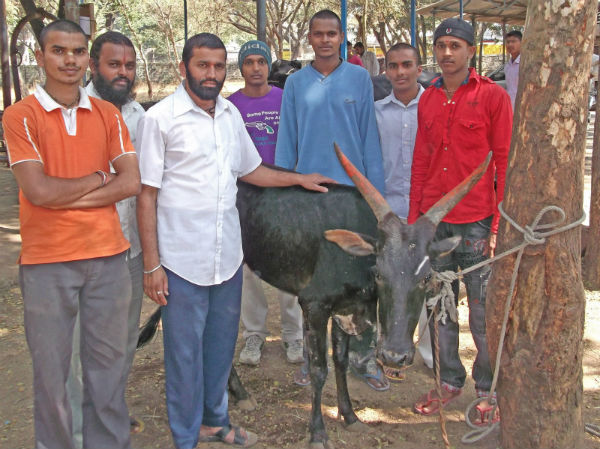 Devout Hindu activists along with a saved Cow |
Miraj (Maharashtra) : Pro-Hindu activists got the news that 4 cows were brought in the animal bazaar for slaughtering. They immediately went to the market to check. All the cows were found tied to a tree. The activists released them with the help of police. Mr. Sudhir Avasare of Sree Shivapratishthan, Mr. Ashok Lakade and Pravin Burga of ‘Peoples for Animal’, Mr. Vinayak Mainkar of ‘Gou-raksha Samiti’, besides Raju Malavade, Santosh Danekar, Vinayak Sawant and other workers were present on the occasion.(Congratulations to all workers who made efforts to save cows! Other Hindus should also extend help in such activities rather than just being onlookers as it will revive Hindu Dharma ! – Editor SP)
When Pro-Hindu activists enquired about the owner of the cows tied to a tree; but nobody came forward to claim ownership. The activists, therefore, sought advice of ‘Market Yard Committee’ and released the cows. They then started taking the cows away from the market; but many butchers present in the market charged on the pro-Hindu activists and opposed them to carry the cows. Many activists gathered in the market. Considering the seriousness of the situation, pro-Hindu activists called up police. When police reached the place of incident, nobody came forward to take ownership of the cows; therefore, the activists, with the help of police, took the cows to animal sanctuary.
Subscribe to:
Posts (Atom)